
HiSTORY
The traditional way of learning about history focuses on the who, what, when, and where. If we are doing a good job of teaching history, we might even touch on the how. To some extent, it is important to learn about what events happened, where they happened, when they happened, and who was involved. The inarguable facts of history. The truth is that in the age of information, our students can easily lookup any of these facts. There is an entirely different way to learn about history though, and that is through themes. When we learn from this lens, we frequently get at the why's of history. We learn about intentionality and motivations, which leads to a deeper understanding of the human condition, and a more dynamic perspective when we consider the changes that are occurring in our world right now. In this class, we will focus on the who, what, when, where and how, but also the why of history.
In seventh grade, students will focus on "connecting the dots" of history, through a lens that focuses on the various themes that make human history so interesting. Students will be creating regional maps out of wood, then use nails and string to show "connections" and digital pages to tell the stories of humanity (linked to QR codes which will be glued to the wood maps). Educators: this project uses the "jigsaw" approach, quite literally, as they will cut out large wood maps, and connect "roads" using string and QR codes that are linked to infographics.
CRITICAL THINKING • INFORMATIVE WRITING • ART • COLLABORATION • RESEARCH • DESIGN THINKING
"History is a symphony of echoes heard and unheard. It is a poem with events as verses." ― Charles Angoff (writer)
Medieval Europe
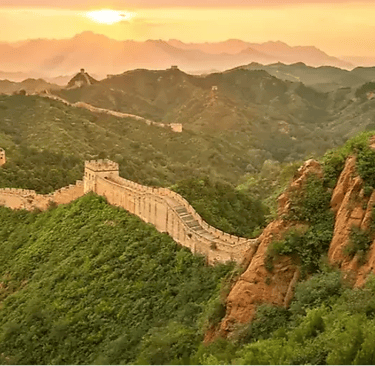
imperial China
Medieval West Africa
ROME NOTES


the Americas
One-Pagers


FEUDALISM TRIFOLD
the RISE of Islam





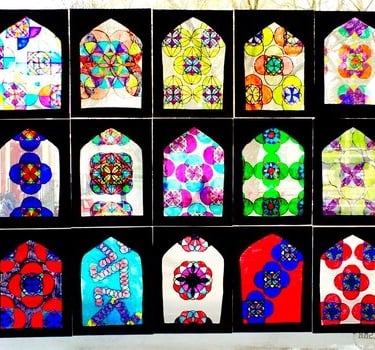
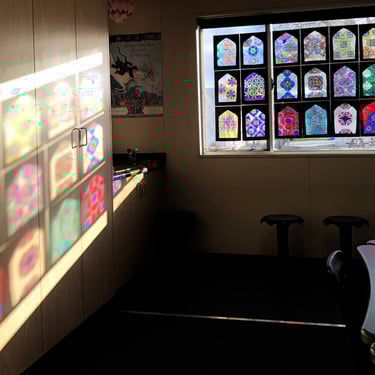
8-point STARS
Stained GLASS
INVENTION SCROLLS
ILLUMINATION
ROBIN HOOD
FEUDALISM GAMES
CASTLES
INCA TRAIL MAP
COLUMBIAN EXCHANGE NEWSPAPER/INFOGRAPHICS


National Geographic has always given readers the bigger picture of our world. Now The World Made New shows children the bigger context of American history. Written by award-winning author Marc Aronson and John W. Glenn, this innovative title will lead students through the causes and consequences of the defining age of exploration. Its unique approach will provide children with new ways of thinking about and learning from history, and instill a lasting sense of our country's past.
The World Made New provides a detailed account of the charting of the New World and the long-term effects of America's march into history. The text uses primary sources to bring history to life and features evocative profiles of the major explorers of the age. The book is beautifully illustrated with full-color artwork, multiple-time lines, and six custom National Geographic maps. The text and layout combine to provide an enlightening overview of New World exploration, and outline the historical context for the discoveries that literally changed the world.
the WORLD MADE NEW
age of exploration
RENAISSANCE AND REFORMATION TRADING CARDS


JOAN of ARC research Essay and art
Good masters Sweet ladies


Boxers and saints
In two volumes, Boxers & Saints tells two parallel stories. The first is of Little Bao, a Chinese peasant boy whose village is abused and plundered by Westerners claiming the role of missionaries. Little Bao, inspired by visions of the Chinese gods, joins a violent uprising against the Western interlopers. Against all odds, their grass-roots rebellion is successful.
But in the second volume, Yang lays out the opposite side of the conflict. A girl whose village has no place for her is taken in by Christian missionaries and finds, for the first time, a home with them. As the Boxer Rebellion gains momentum, Vibiana must decide whether to abandon her Christian friends or to commit herself fully to Christianity.